A Cholera outbreak in Zimbabwe has so far killed 792 people with many more expected to die. Non Profit Organizations in Zimbabwe have predicted that if the spread of Cholera is not contained, up to 60,000 people could be infected with the disease. Contrary to what aid agencies have said, President Robert Mugabe announced that the spread of Cholera has been halted. Furthermore, Mugabe has placed blame on former colonial power Great Britain for causing the outbreak. A Zimbabwean minister, Mr Ndlovu, said that the government possesses "factual information on how Cholera was brought to Zimbabwe". According to Mr. Ndlovu, the outbreak is a "genocidal onslought on the people of Zimbabwe by the British still fighting to re-colonize Zimbabwe." The minister also states that "Cholera is a calculated rascist terrorist attack".
These are harsh words by the government of Zimbabwe concerning Britains involvement in its latest plot to re-colonize the former "breadbasket of Africa". If any respectable nation had uttered such serious accussatinos, one might pause for a second and wonder if there was any truth behind it. But Zimbabwe has long ago lost any respectability and Britain is used to such accusations. Britain, along with other Western nations, have been blamed before for Zimbabwes hardships. Everything that goes wrong in Zimbabwe is conveneintly caused by western sabatoge. Zimbabwe has even accused its neighbor Zambia of being "hired by Britain to press for a speedy regime change in Harare."
Mugabe is fast losing control of his country. Inflation is out of this world, famine is griping the nation, and now recently Cholera is spreading. Mugabe has managed with brute force to stay in power, but he still has to deal with power sharing talks with the unbudging opposition leader, Morgan Tsvangirai. Mugabe has long ago found it easiest to blame Zimbabwe's woes on others, most notebly Britain. This is only a sign however, that things have gotten out of hand and the situation cannot be properly dealt with. Mugabe will soon either have to admit defeat, or his closest allies will have no choice but to turn against him. The time when Mugabe is no longer able to provide food for his sucurity forces will be the end of Mugabe. That time is getting closer by the day.
Zimbabwe continues to blame Britain for its troubles
YouTube- So much to see. News Bloopers Part 1
Many of us have found ourselves preoccupied for hours on end immersed in possibly the biggest distraction the Internet has to offer - YouTube. There is just so much to view, from home videos to annoying commentaries on life. As we search YouTube looking for a particular clip or wondering aimlessly around for anything interesting, we often come across a video we like, and we "favorite" it for future reference. Here is a collection of videos that I have found rather funny, all having taken place on major news channels. Feel free to submit your own.
To start things off, this newsman loses his script and the fact that the teleprompter probably was not working proves too much for him to deal with. He fails at his attempt at making some sense of the story, "umm...he...uhhh... has done something that is very good..."
Nice try, but I don't think I quite understand the story...
A news reporter has a bit of an accident live on T.V. That must have hurt!
I wonder if he emotionally recovered from that incident.
A reporter mixes up two completely different words to her embarrassment. Not sure what she was thinking of at the time...
I wouldn't be too surprised if she got fired for this.
O.K. the next one is not so funny. A Japanese reporter falls five stories after trying to test a new fire escape system. The device was supposed to gently lower a person down, but was not properly secured and hence it failed. Fortunately safety mats were set up at the bottom. She suffered an injury to her waist and it took her three months to fully recover.
Don't quite know why the commentator was laughing at the end though.
Political Cartoons
Political cartoons add a lot to a news story. Sometimes they make you see things from a new perspective, other times they provide the viewer with help in understanding a particular situation. The most important aspect of a political cartoon however, is that it makes the reader think, and in doing so enables one to form personal opinions.
Here is a round up of some of the best political cartoons over the past two months. On August 7th 2008, Russia invaded the Georgian territory of South Ossetia causing international outcry. The U.S.A. was quick to condemn Russia stating that the invasion was unacceptable in the 21st century.
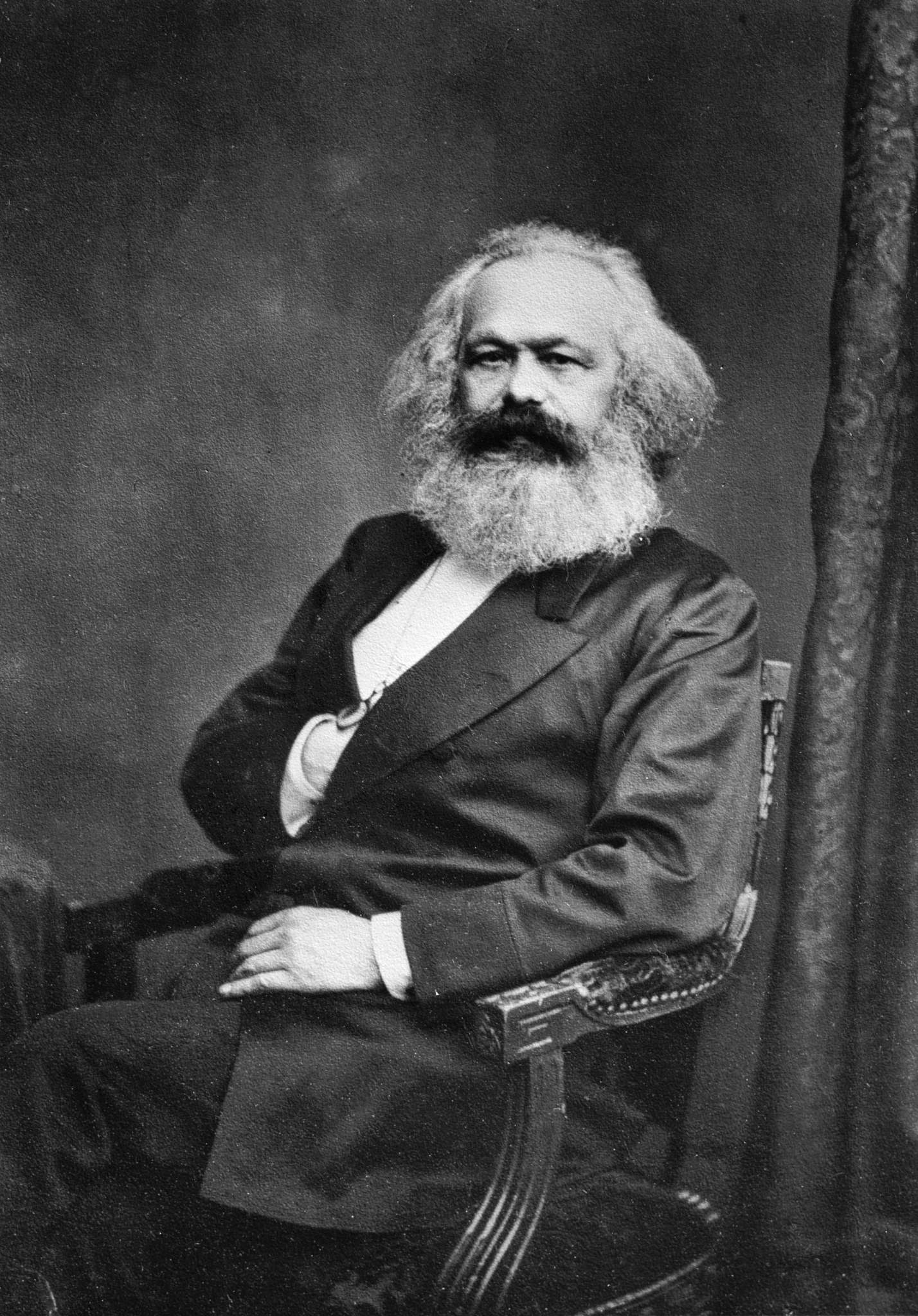
 After the sub prime mortgage crisis numerous banks went bankrupt and the economy took a nose dive. In the hopes of salvaging key banks the American government launched a bailout plan worth $700 billion. This contrasts with their free market ideology and is more in line with that of socialism. (If you are unable to grasp the meaning of this cartoon, take a look at a picture of Karl Marx).
 National Security has taken a back seat at this years U.S. presidential election as the economy shows signs of melting down.
 The U.S. financial crisis is linked with the war in Afghanistan in this political cartoon. Recently the top military commander of the British Army has stated "We're not going to win this war". Will the U.S. and its allies withdraw from Afghanistan like the Soviets did in 1989? The Soviets stayed in Afghanistan for 10 years and withdrew partly due to the severe economic problems they were facing at home. They also saw heavy fighting and lost over 15,000 troops.
Piracy - A career choice in Somalia

Somalia is a war torn, and highly dangerous African country located on the east coast. It is one of the most unstable nations on the planet - in fact it is hard to even characterize Somalia as a "nation". Instead of a centralized government, Somalia is divided up into smaller territories, with each respective territory currently ruled by a different government or warlord fighting for more territory. In the north lies Somaliland located adjacent to Puntland (Somalias' transitional government). Islamic militia controls a large portion of central Somalia, imposing strict Islamic law in the process. The rest of Somalia is ruled by rivaling warlords. For the money hungry, or poverty-stricken Somalian (which ever definition you prefer), there are two main advantages to living in Somalia. For one, there is little the weak and unstable government can do to a strong organized crime syndicate equipped with militia. The second advantage is that Somalia has long stretches of coastline right next to some of the busiest sea routes in the world. This creates the perfect environment for a booming piracy business.
On the 21st of August, 40 pirates equipped with AKs and RPGs (rocket propelled grenades) boarded and captured an Iranian ship. This is not an uncommon sight in and around the waters of Somalia. After docking it at a nearby port without hindrance, the pirates began their routine negotiations with the shipping company - which at this time happened to be the Islamic Republic of Iran shipping (owned by the Iranian military). Sometime after the capture of the large cargo tanker however, some of the pirates began experiencing strange medical symptoms, with some dying later. A minister of the government of Puntland has stated, "'[the ship] is not carrying a normal shipment". There is great suspicion (and absolute certainty from the Americans), that Iran is supplying the Islamic insurgents in Somalia with sophisticated weaponry under the cover of a commercial shipping company. This act only undermines the stability of the region, prolonging the war between the various fractions of Somalia. What exactly this ship contains is unclear, but it could be anything from toxic waste to poisonous gases.
More recently Somalian pirates have captured a Ukrainian ship bound for Kenya carrying a load of 33 Russian T-72 tanks and a substantial amount of ammunition. The pirates initially demanded a payment of $35 million but have brought that figure down to $20 million. Three warships, two from the EU and one American are currently chasing it down. What will happen to the ship and its crew is uncertain. There are essentially two different ways this could play out. One is that the money is payed (which is usually what happens), but a second, riskier method is to send in highly specialized commandos to seize the ship (like the French have done on two previous occasions). The main objective however is to seize the vessel before the shipment gets into the wrong hands. Thirty three advanced tanks can cause massive damage on a battlefield dominated by machine gun mounted Toyota pickups.
Piracy is an enormous business in Somalia generating over $100 million a year. It is a tested and proven get rich quick scheme for the average Somalian. While there is an international naval presence near Somalia, this has only cut down the number of attacks by a small percent. What needs to be done to eradicate piracy is to create a strong and efficient central government in Somalia that is able to crack down on pirates instead of harbouring them. This undoubtedly will be hard to achieve, but until this happens, piracy will continue to thrive.
More information will be posted when it happens.
Somalia, situated on the east coast of of Africa, forms what is known as the "Horn of Africa".
Russia's invasion of Georgia

When Russia launched a military offensive into South Ossetia (part of Georgia), it was met with world displeasure. Many nations disapproved of Russia's tactics, but held full support for Georgia. Throughout the media and public speeches made by world leaders, we were left with the idea that Georgia was the victim and Russia the aggressor - willing to invade another nation simply to prove its might and expand its wealth. Though the previous statement does hold a fair bit of truth (Russia does indeed feel the need to prove its strength and show that it is an important component of world politics), the situation in Georgia is not so simple. First off, it is necessary to note that South Ossetia is comprised up of mainly ethnic Russians (more than two thirds). South Ossetia had previously declared independence from Georgia, and before the conflict arose, Georgian troops clashed with South Ossetian separatists. In an interesting political ploy Moscow had previously offered Russian passports to South Ossetians, of which more than half the population accepted. Though Russia did invade South Ossetia (and in turn, Georgia), Georgia made the first move by bombing South Ossetia itself, with the intention of regaining full control the area. To many South Ossetians, Russia's invasion is seen as a liberation of South Ossetia from their rulers.

Interview: New Teachers
Three new teachers entered H.I.S. this year: the new P.E. teacher Ms Brown (B), the math teacher Mr Johnston (J), and the Spanish teacher Mrs. Lopez (L) (whose interview will be posted shortly). Here is what they have to say.